Sam Clemens had a new problem.
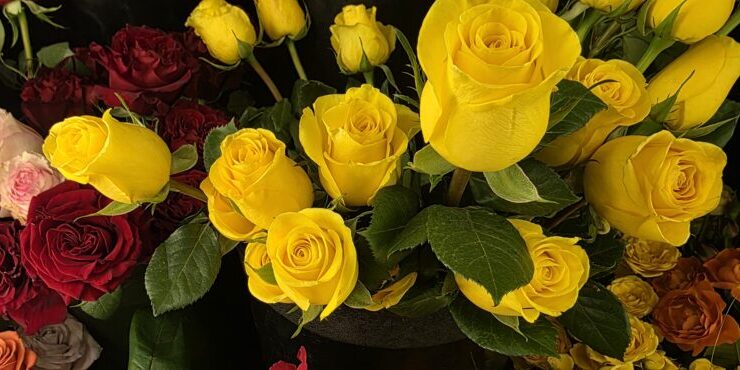
Yellow flowers, she had learned, were apparently about hope.
Hope. Anticipation. New beginnings.
These were considerably more difficult to investigate than pumpkin spice.
You cannot simply walk into a coffee shop and order hope.
So Sam went looking for it.
She did not have to go far.
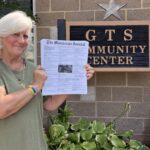
She found herself at the Georgetown South Community Center in Manassas.
What Yellow Flowers Represent
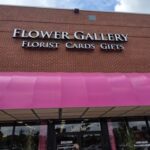
Sam’s investigation had already taken an unexpected turn at the Flower Gallery.
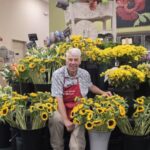
She went there looking for evidence of the annual pumpkin-spice invasion and instead discovered preparations for Yellow Flowers Day.
The modern tradition traces back to the Argentine television series Floricienta, where yellow flowers became associated with affection, hope and the anticipation of something good arriving.
The custom became connected with Sept. 21, traditionally associated with the beginning of spring in Argentina and other parts of the Southern Hemisphere.
Then social media found it.
TikTok and Instagram helped introduce the tradition to a new generation and spread it well beyond Argentina.
What began as a television storyline became something people began doing themselves.
Give someone yellow flowers.
Tell them they matter.
Look forward to something better.
Sam understood the flowers.
The harder question was where to find the rest of it.
A Corner of Manassas
At Georgetown South, hope looks considerably less decorative.
Sometimes it looks like a backpack.
Sometimes it is a book.
Sometimes it is a summer program, a meal, a class, a neighborhood event or someone sitting down with a family trying to figure out what comes next.
The Georgetown South Community Center has spent years working with children and families in one of Manassas’ largest neighborhoods.
Its programs have included school-supply distributions, youth activities, reading programs, educational opportunities, community events and other services intended to help residents gain stability and opportunity. Georgetown South’s own community publications document school-supply distributions, youth camps, reading programs and other neighborhood activities.
Much of that work happens quietly.
Meg Carroll and the people working alongside her are often dealing with the practical things that rarely become headlines.
A child needs supplies for school.
A family needs information.
Young people need somewhere productive to go.
A neighborhood needs volunteers.
Someone needs help finding the next step.
The work is not particularly glamorous.
Neither is hope, apparently.
The Next Project
The center is now raising money again.
On Oct. 9, Georgetown South will hold its Tapas and More 2026 fundraiser from 6 to 11 p.m. at the community center.
The event includes food, music and entertainment, with proceeds intended to support educational and recreational camps and workshops and begin work toward a professional soccer field.
Tickets are $50.
It is another example of something Sam was beginning to notice during this investigation.
People see something their community needs.
Then they start trying to build it.
This Story Sounds Familiar
That observation sent Sam somewhere she had not expected to go when this investigation began.
Back into Manassas history.
More than a century ago, another woman looked around her community and saw people who needed opportunities that did not exist for them.
Her name was Jennie Dean.
Born enslaved in Loudoun County, Dean became involved in education and eventually began building support for a school that would provide academic and vocational education to African American students.
She spent years raising money and organizing support for what became the Manassas Industrial School for Colored Youth.
The school was chartered in 1893. Frederick Douglass spoke at its dedication, and the first students arrived in 1894.
The school provided regular academic classes along with occupational training at a time when educational opportunities for Black students were severely limited.
And one statement associated with Dean has survived more than a century:
“You do your part and I’ll do mine.”
That is a considerably bigger story.
It deserves its own investigation.
But standing in Georgetown South, Sam had stumbled onto the beginning of it.
Not because Georgetown South and Jennie Dean’s school are the same institution. They are not.
The circumstances are different. The time is different. The challenges are different.
The connection is simpler.
Manassas has a long history of people looking around their community, recognizing a need and deciding that somebody should do something about it.
Sometimes that somebody was them.
The Investigation Continues
Sam began this assignment trying to understand why otherwise reasonable people become emotional about pumpkin spice.
Then she found yellow flowers.
The yellow flowers led to hope.
Hope led to Georgetown South.
And Georgetown South somehow led her back more than 130 years to Jennie Dean.
This investigation is becoming increasingly difficult to control.
Next stop: a woman who helped build a school and a community that decided to help her do it.
Sources / Reference Links
Manassas Journal: The Vitriol Over Pumpkin Spice: Is It Justified?
Manassas Journal: Sam Clemens Goes Looking for Pumpkin Spice and Finds Yellow Flowers
Georgetown South Community Council and Community Center materials
Tapas and More 2026 fundraiser flyer, Georgetown South Community Center
Library of Virginia: Jennie Serepta Dean
Virginia Department of Historic Resources: Manassas Industrial School for Colored Youth
Jennie Dean Educational Foundation