Prince William County supervisors have unanimously approved a resolution opposing the permanent removal of treated Upper Occoquan Service Authority water from the Occoquan watershed when that water would otherwise return to the regional reservoir system.
The Board approved Resolution 26-538 on Sept. 15, formally putting the County on record against consumptive uses that would prevent treated UOSA water from returning to the Occoquan watershed.
The action follows an issue the Manassas Journal first reported Sept. 11, when a proposed Prince William resolution referred to renewed interest by certain UOSA and City of Manassas representatives in consumptive reuse but did not identify a specific project, intended user, amount of water or timetable.
Those questions remain unresolved.
2-Minute Brief
WHAT CHANGED: Prince William County unanimously approved Resolution 26-538 opposing permanent diversion of treated UOSA water from the Occoquan watershed.
WHAT HAS NOT CHANGED: Public records reviewed so far still do not identify a specific approved City of Manassas project, intended user, water volume, agreement or timetable.
REGIONAL WATER SUPPLY: UOSA-treated water normally returns to the Occoquan system. Fairfax Water says that during dry periods or drought, UOSA effluent can account for as much as 90% of the water flowing into the Occoquan Reservoir. That figure refers to reservoir inflow during those conditions, not 90% of reservoir storage or annual drinking-water use.
WHAT REMAINS UNKNOWN: What the City of Manassas is seeking to do with reclaimed UOSA water, how much water could be involved, what approvals would be required and whether any proposed use would permanently remove water from the Occoquan watershed.
What Prince William Approved
The resolution does not oppose all reuse of treated water.
It focuses on consumptive reuse, meaning water would be used in a way that permanently removes it from the Occoquan watershed rather than eventually returning it to the reservoir system.
Prince William’s resolution supports maintaining UOSA return flows into the Occoquan system.
The distinction between consumptive and non-consumptive reuse was also part of the proposed resolution the Journal reported before the Sept. 15 vote.
Why the Issue Predates the September Vote
Regional records show that the issue did not begin with Prince William County’s September resolution.
A June 2 presentation from Fairfax County and Fairfax Water identifies a 2025 exploration of selling UOSA effluent for large-scale consumptive industrial use.
The same presentation lists earlier proposals involving UOSA water, including industrial process use in 1978 and cooling-water use in 2009.
Fairfax Water’s stated position is that UOSA effluent should continue returning to the Occoquan to support water-supply reliability. Its presentation also says planning for the Griffith Water Treatment Plant depends on existing and projected UOSA flows to the reservoir.
Those records establish a continuing regional disagreement over how UOSA-treated water should be used.
They do not establish that the City of Manassas has approved a current diversion project or identify who would receive reclaimed water under any current proposal.
Why the Return Flow Matters
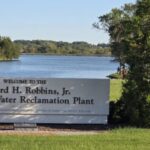
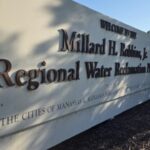
UOSA treats wastewater from portions of Prince William County, Fairfax County, the City of Manassas and the City of Manassas Park.
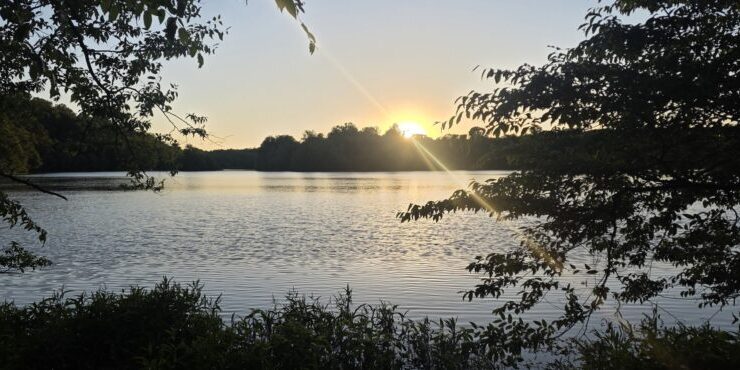
After treatment, reclaimed water is discharged into Bull Run and becomes part of the water flowing toward the Occoquan Reservoir.
Fairfax Water uses the Occoquan Reservoir as one of its major water sources.
According to Fairfax Water, UOSA effluent can make up as much as 90% of reservoir inflow during dry periods or drought.
The figure varies with conditions. It describes the proportion of water entering the reservoir during those periods, not the percentage of total reservoir storage or annual drinking-water consumption.
Where the City of Manassas Fits
The City of Manassas is one of the four jurisdictions that make up UOSA.
The City’s drinking-water system is separate from the Occoquan Reservoir system, with Lake Manassas serving as a primary water source. Its wastewater, however, is treated through the regional UOSA system.
The City of Manassas has discussed reclaimed water and industrial use in broader policy discussions.
The records reviewed so far do not establish that the City of Manassas has approved a specific project that would permanently remove treated UOSA water from the Occoquan watershed.
What Is Still Unknown
Public records reviewed so far do not establish:
- what specific reclaimed-water proposal or policy request the City of Manassas is currently pursuing;
- whether there is a specific intended user or type of user;
- how much water is being considered;
- how much of that water, if any, would no longer return to the Occoquan watershed;
- whether a contract, agreement or feasibility study exists;
- where any proposed reclaimed-water use would occur;
- what approvals would be required from UOSA, its member jurisdictions or other authorities;
- whether operating limits, minimum return flows, drought restrictions or other conditions have been proposed;
- or when any project could move forward.
Prince William County’s vote establishes the County’s position. It does not establish what specific proposal, if any, the City of Manassas is pursuing.
What Happens Next
The remaining questions concern what the City of Manassas is proposing, the amount and intended use of any reclaimed water, what approvals would be required and how Prince William County’s resolution affects any future proposal.
Those details have not yet been established in the public records reviewed for this report.
Sources / Reference Links
Manassas Journal: Prince William to Consider Resolution Opposing Permanent Diversion of UOSA Water
Prince William County Board of County Supervisors: Sept. 15, 2026 meeting action and Resolution 26-538
Fairfax County / Fairfax Water: June 2, 2026 joint presentation on water supply, UOSA return flows and consumptive reuse
Upper Occoquan Service Authority: governance and regional water-reclamation information
City of Manassas: water and wastewater system information