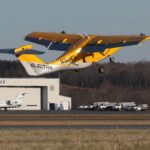
A hybrid-electric airplane developed by Manassas-based Electra recently flew between Manassas and Philadelphia as part of a Federal Aviation Administration program testing how new types of aircraft could connect smaller airports with major airline hubs.
The FAA announced Aug. 18 that Electra conducted the demonstration flights with transportation agencies in Pennsylvania and New Jersey.
The flights traveled between Washington Manassas Airport and Philadelphia International Airport, with stops at smaller airports in New Jersey and Pennsylvania along the way.
2-Minute Brief
What happened
The flights were part of the FAA’s eVTOL Integration Pilot Program, a national effort testing how newer aircraft can safely operate alongside airplanes already using the country’s airports and airspace.
The program includes eight projects across 26 states.
Despite the program’s name, Electra’s airplane does not take off vertically like a helicopter or some proposed air taxis. It takes off and lands on a runway like a conventional airplane, but it is designed to use much less runway.
The FAA says information collected from the demonstrations will help identify operational challenges, improve procedures and determine how these aircraft could safely operate within the existing aviation system.
How does a hybrid-electric airplane work?
Electra’s aircraft uses both batteries and a small fuel-powered turbine generator.
Electric motors turn the propellers. Batteries provide power during takeoff and landing, while the turbine generator produces electricity during cruise and can recharge the batteries while the airplane is flying.
In other words, hybrid-electric does not mean fuel-free. The aircraft still carries fuel, but uses a generator to produce electricity while electric motors provide the propulsion.
Electra says its hybrid system is compatible with sustainable aviation fuel, an alternative aviation fuel designed to reduce lifecycle emissions compared with conventional fuel. The company has not said what fuel was used during the recent Manassas-to-Philadelphia demonstration flights.
Eight electric motors and propellers are positioned across the wings. The propellers push air over the wings, helping the aircraft create more lift while traveling at relatively slow speeds.
Engineers call this blown lift.
In practical terms, it allows the airplane to take off and land in unusually short distances. Electra has demonstrated its test aircraft operating from spaces shorter than 300 feet.
Electra’s Manassas operations
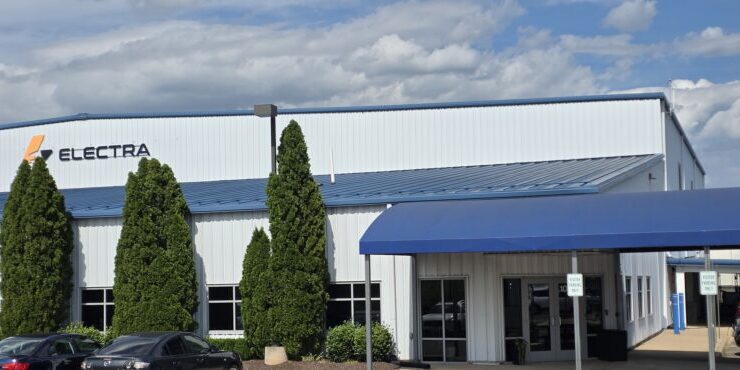
Electra is headquartered at Washington Manassas Airport, where the company conducts engineering, aircraft development and flight testing.
In November 2023, Electra completed the first hybrid-electric flight of its two-seat test aircraft from Manassas. According to the company, that flight lasted 23 minutes, reached 3,200 feet and covered about 30 miles.
The small aircraft flying today is a technology demonstrator — essentially a working test airplane used to prove the technology and gather information before it is incorporated into a larger passenger aircraft.
Electra has since expanded its Manassas facilities, adding a 15,000-square-foot hangar and about 6,000 square feet of office space for development and engineering teams.
The company is now developing a larger hybrid-electric aircraft designed to carry nine passengers.
What Electra says
The latest FAA demonstration tested something beyond the aircraft’s ability to fly: how this type of airplane could operate between smaller communities, regional airports and major airline hubs.
Electra CEO Marc Allen described that as the company’s goal.
“Electra’s Ultra Short aircraft can create direct connections between communities, regional airports, and major hubs, unlocking a faster, more accessible way to travel,” Allen said in the FAA announcement.
That remains a future goal. Electra’s planned passenger aircraft is still under development and has not been certified to carry commercial passengers.
From a test airplane to a passenger aircraft
In July, Electra reached an important point in the FAA certification process for its planned nine-passenger aircraft.
Federal regulators formally established the safety standards the aircraft will have to meet to earn certification.
That does not mean the aircraft has been approved for passenger service.
Engineering work, ground and flight testing, and additional FAA review remain. Electra currently expects the passenger aircraft to enter service around 2030.
The company also announced in July that it plans to build its first large-scale production facility in Springfield, Ohio, while continuing portions of its business from its Manassas facilities.
Manassas Airport is also preparing for commercial service
Separate from Electra’s aircraft-development program, Washington Manassas Airport is preparing for scheduled commercial passenger service.
The City and airport operator Avports are working through the federal approvals and airport improvements needed to accommodate airline operations.
On July 30, the FAA completed its environmental review of the airport’s commercial-service redevelopment program and issued a Finding of No Significant Impact and Record of Decision.
In plain language, the FAA determined that the proposed project would not have significant environmental effects under the federal review process. This cleared an important federal step and allows the project to move forward through additional approvals and development.
The airport is also working toward Part 139 certification.
Part 139 is the section of federal aviation regulations that establishes operating and safety requirements for airports serving certain commercial passenger flights. It covers areas such as airport inspections, firefighting, emergency response and airfield safety.
Planned work also includes terminal improvements and airfield upgrades to accommodate commercial aircraft.
Airport officials continue to target spring 2027 for the start of scheduled passenger service. That remains a target rather than a firm launch date and depends on remaining certification, construction, airline agreements and other preparations.
Some longer-term airport improvements are expected to continue after passenger service begins.
What happens next
The FAA says it plans additional advanced-aircraft demonstration flights during the remainder of 2026.
Electra will continue developing and testing its planned nine-passenger aircraft as it moves through the FAA certification process.
At Washington Manassas Airport, work continues separately on the certification and improvements needed for scheduled commercial passenger service.