Airport Director Juan Rivera says a new terminal is nearing construction and talks with a prospective first airline are advanced, marking the latest step in a transformation that began decades ago.
2-MINUTE BRIEF
WHAT’S NEW: Washington Manassas Airport Director Juan Rivera says negotiations are advanced with a prospective first airline, with an announcement possible later this year.
WHAT’S NEXT: Avports is preparing to build a standalone passenger terminal south of the existing airport terminal. Rivera said the design is about 95% complete and construction could begin later this year.
WHEN COULD FLIGHTS BEGIN: Rivera said the current goal is to begin scheduled passenger service around November 2027, although he cautioned that the construction schedule will be tight.
THE BIGGER PICTURE: Rivera has led the airport for 25 years, through a period when it required outside financial support and had significant infrastructure needs to its current position as a self-sustaining general aviation airport preparing for commercial service.
Washington Manassas Airport has cleared one of its largest federal hurdles. Now attention is shifting to the airline, the terminal, and when passengers may actually begin flying out of Manassas.
Rivera told the Manassas Journal Tuesday that Avports is in advanced negotiations with a prospective first carrier.
“We do have an airline that I feel is going to be a day-one airline,” Rivera said.
Rivera said negotiations are still underway and that, if they proceed as expected, an airline announcement could come around November or December of this year.
The current target is for scheduled passenger service to begin around November 2027.
No airline, destinations or flight schedule have been publicly announced.
A New Terminal Comes Next
The next major physical step is construction of a commercial passenger terminal.
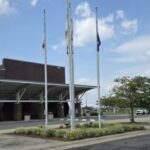
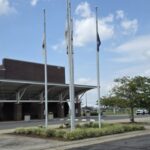
Rivera said Avports, the airport’s private commercial-development partner, will build a standalone terminal south of the existing airport building.
He estimated the design is about 95% complete and said construction could begin later this year, potentially around November or December.
The terminal project is separate from the City’s planned replacement air traffic control tower.
Avports entered a 40-year partnership with the City in 2023 to develop, finance and operate the commercial-passenger side of the City-owned airport. The agreement includes development of a passenger terminal and supporting infrastructure.
Rivera described the first terminal as a functional facility designed around quick passenger movement, security screening, seating, reliable internet, clean restrooms and basic concessions.
“We don’t want you sitting there all day,” Rivera said.
Initial concessions are expected to focus on grab-and-go coffee and snacks rather than full-service dining.
If commercial service grows, Rivera said the airport could eventually expand the facility and add more amenities.
Twenty-Five Years of Leadership at Manassas
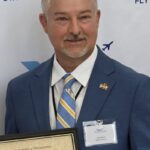
Rivera has led Washington Manassas Airport for 25 years, overseeing its transition from a financially struggling operation with major infrastructure needs into a self-sustaining airport now preparing for scheduled passenger service.
A Virginia native who grew up in a military family, Rivera was born in Germany and later lived in Chesterfield County. He served as a Marine officer after college, earned a degree in aviation administration and is a private pilot.
Before coming to Manassas, he spent 6½ years at Leesburg Executive Airport.
Rivera said the airport he inherited looked very different from what it looks like today.
The department had three employees, airport revenue was not sufficient to cover operations, and the airport required financial support from the City’s general fund.
Rivera also recalled significant infrastructure needs, including deteriorated runway pavement.
“We had a lot of work to do,” he said.
Running the Airport Like a Business
Rivera said one major change was treating the airport more like a business.
The airport had land available for private aviation development, and officials worked to attract companies willing to invest and lease property.
About 60% of the airport’s revenue comes from land and ground leases, Rivera said.
He said the airport has been financially self-sufficient for many years and maintains a healthy fund balance.
Rivera also said businesses operating at the airport contribute approximately $1 million annually to the City’s general fund through taxes, including real estate and personal property taxes.
He said the economic role of general aviation can be easy to overlook.
Airport businesses generate local activity, while corporate aircraft also bring companies and travelers directly into Manassas and Prince William County.
The airport department itself has grown from three employees when Rivera arrived to 13 today, he said.
The airport has also expanded its operating and emergency-response capabilities as it prepares for commercial service.
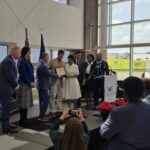
The Part 139 certification received Aug. 31 requires the airport to meet federal operating and safety standards for commercial passenger service, including requirements involving runway safety, emergency planning and aircraft rescue and firefighting.
Commercial Service Without Leaving General Aviation Behind
One concern Rivera says he hears regularly is what commercial service will mean for the airport’s existing general aviation community.
His answer is direct.
“We’re not kicking you to the curb,” Rivera said.
The airport has already held one town hall with general aviation users and plans another this fall.
Rivera said the airport’s two-runway configuration gives it flexibility to accommodate different types of aviation activity.
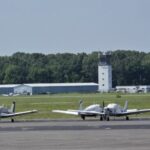
His long-term concept places larger aircraft primarily on the east side of the airport while smaller single-engine aircraft and light twins remain concentrated on the west side.
He also pointed to continuing investment and infrastructure improvements on the west side as part of the airport’s commitment to general aviation.
What Comes Next
Rivera is also watching new aviation technology developing around the airport.
Electra has been testing hybrid-electric aircraft at Manassas, part of the broader advanced-air-mobility industry.
Rivera said he is interested in the technology but cautious about predicting which aircraft or operating models will ultimately succeed.
“We’re taking a wait-and-see kind of attitude,” he said.
He said smaller regional aircraft could eventually create additional opportunities at Manassas, potentially including shorter flights to communities that do not support traditional airline service.
That remains a future concept, not an announced project.
For now, the airport’s next milestones are clear.
A terminal has to be built.
An airline agreement has to be completed.
Routes have to be announced.
After 25 years leading the airport through major changes in its finances, infrastructure and operations, Rivera is now preparing for the next major step: scheduled passenger service from Manassas.
SOURCES
- Federal Aviation Administration — Part 139 Airport Certification
- Federal Aviation Administration — Washington Manassas Airport environmental review / FONSI-ROD
- Washington Manassas Airport — airport history, operations and Commission records
- Avports — City of Manassas public-private partnership and terminal-development information
- Manassas Journal interview with Washington Manassas Airport Director Juan Rivera, Sept. 1, 2026
- Manassas Journal firsthand reporting and certification ceremony notes, Aug. 31, 2026