2-Minute Brief
Why it matters
Virginia approved several housing changes in 2026 that will affect what can be built in Manassas and how much authority the City has over certain housing projects.
Three separate policies are involved:
ADU – Accessory Dwelling Unit
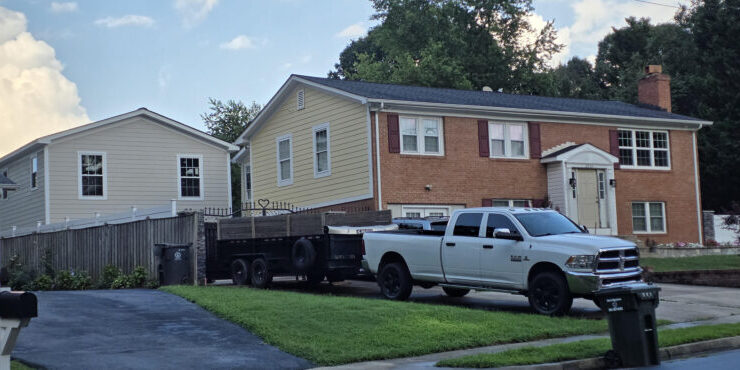
A second dwelling on the same residential lot as a primary home, such as an attached apartment, garage apartment or detached backyard unit.
AFDU – Affordable Dwelling Unit
Housing created through a local affordable-housing program.
Faith-based/nonprofit housing
A new Virginia law allowing qualifying property-tax-exempt religious organizations and certain 501(c)(3) property-tax-exempt nonprofits to develop housing by right when the requirements of state law are met.
What happened?
On August 5, 2026, the Manassas Planning Commission and Housing Advisory Board held a joint meeting to discuss Affordable Dwelling Unit and Faith-Based Housing ordinances.
The official meeting packet included Virginia’s new laws, the Manassas Comprehensive Plan housing chapter, the City’s Housing Trust Fund report and examples of affordable-housing ordinances from other jurisdictions.
The August 5 agenda was for discussion and did not include an ordinance for adoption.
Official City meeting materials:
Planning Commission and Housing Advisory Board, August 5, 2026
https://manassascity.granicus.com/
Accessory Dwelling Units (ADUs)
Beginning July 1, 2027, Virginia law will generally treat accessory dwelling units as a permitted accessory use in single-family residential zoning districts.
An ADU must be on the same lot as a primary residence and provide independent facilities for living, sleeping, eating, cooking and sanitation.
Localities may still regulate certain issues, including:
- Parking.
- Building and safety codes.
- Water, sewer and stormwater requirements.
- Unit size and lot coverage.
- Minimum rental periods.
- Historic and architectural districts.
Virginia law also limits some local restrictions. For example, a locality cannot require the occupants of the ADU and primary home to be related.
Virginia Code § 15.2-2292.4:
https://law.lis.virginia.gov/vacode/title15.2/chapter22/section15.2-2292.4/
Affordable Dwelling Units (AFDUs)
Beginning July 1, 2027, Virginia law will allow any Virginia locality to establish an Affordable Dwelling Unit program through its zoning ordinance.
The program is optional. Manassas may create one, but state law does not require the City to do so.
State law allows local programs to consider tools including:
- Density increases.
- Reduced lot sizes or other dimensional changes.
- Contributions to a local housing trust fund.
- Accessory housing allowances.
- Housing inspection programs.
- Duplexes, triplexes and four-unit housing.
- Conversion of some office, commercial or light-industrial space to multifamily housing.
Virginia Code § 15.2-2304:
https://law.lis.virginia.gov/vacode/title15.2/chapter23/section15.2-2304/
Faith-Based and Nonprofit Housing
A separate Virginia law takes effect January 1, 2027.
The law requires localities to allow qualifying residential or mixed-use projects by right on property owned by a qualifying property-tax-exempt religious organization or 501(c)(3) property-tax-exempt nonprofit.
For a qualifying project, the locality cannot require a rezoning, special-use permit, special exception or other discretionary land-use approval.
Among the requirements:
- The organization must have owned the property continuously for at least five years before the development application.
- At least 60% of the housing units must meet the state affordability requirements.
- Rental units must be affordable at 80% or less of area median income.
- For-sale units may serve households up to 120% of area median income.
- Affordability must be preserved for at least 30 years.
- The property must be served by, or be within an area planned for, public water and sewer.
For qualifying properties, Virginia law requires local zoning to allow at least:
- 20 dwelling units per acre, or the most intensive existing residential density within 500 feet if greater.
- A building height of 45 feet, or the height of the tallest qualifying existing building within 500 feet if greater.
- 10-foot setbacks, or the smallest applicable existing setback within 500 feet if less.
- Detached, attached and multifamily housing.
Residential parking requirements generally cannot exceed one space per unit and may be lower depending on existing local requirements.
The law does not apply to property zoned for industrial use or property adjacent to industrially zoned land. Existing historic-district height requirements also receive specific protection.
The law is effective from January 1, 2027 through January 1, 2031.
Virginia Code § 15.2-2288.9:
https://law.lis.virginia.gov/vacode/title15.2/chapter22/section15.2-2288.9/
Key dates
January 1, 2027
Virginia’s faith-based/nonprofit housing law takes effect.
July 1, 2027
Virginia’s statewide ADU law takes effect.
July 1, 2027
Expanded statewide authority for local AFDU programs takes effect.
What’s next?
Manassas is reviewing how the new state housing laws apply locally.
Among the issues to be determined are:
- What the City can and cannot regulate under state law.
- Whether Manassas will create its own AFDU program.
- What local ordinances or administrative procedures will be needed.
- How qualifying faith-based/nonprofit projects will be reviewed when applications are submitted.
Learn more
City of Manassas
Planning Commission:
https://www.manassasva.gov/community_development/meetings_and_hearings/planning_commission.php
City Boards and Commissions:
https://manassascity.granicus.com/boards/
Virginia Law
Accessory Dwelling Units, § 15.2-2292.4
https://law.lis.virginia.gov/vacode/title15.2/chapter22/section15.2-2292.4/
Affordable Dwelling Unit Programs, § 15.2-2304
https://law.lis.virginia.gov/vacode/title15.2/chapter23/section15.2-2304/
Religious and Nonprofit Housing, § 15.2-2288.9
https://law.lis.virginia.gov/vacode/title15.2/chapter22/section15.2-2288.9/
Journal Note
ADU, AFDU and faith-based/nonprofit housing are three different policies with different rules and effective dates.
The Manassas Journal will continue following each issue through the City’s public process and provide links to agendas, public documents and Virginia law so residents can review the source material themselves.