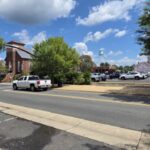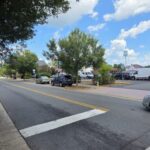
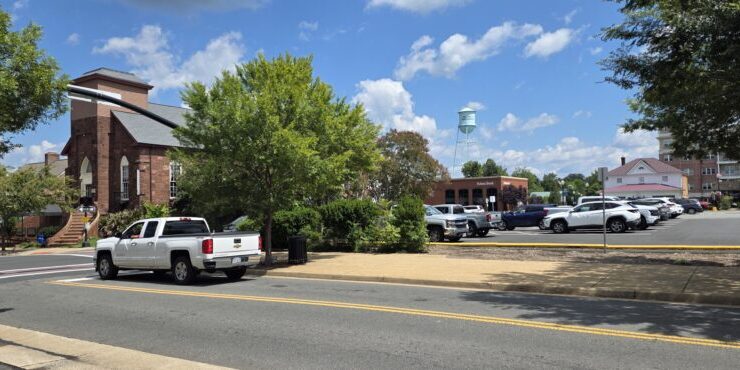
The former Olde Towne Inn site remains slated for a hotel, on a block shaped by more than a century of hotel, theater and community history.
2-MINUTE BRIEF
IS THE HOTEL STILL PLANNED? Yes. A boutique hotel remains part of the larger redevelopment of the former Olde Towne Inn and MIFCO properties and the City Hall parking area.
WHAT IS PROPOSED? The 2025 development concept calls for a four-story boutique hotel with dining, retail and meeting space on the former Olde Towne Inn property.
WHAT’S NEXT? Christian Samples, Manassas Planning Manager and Zoning Administrator, told the Manassas Journal that detailed hotel plans are expected later this fall and will require review by the Architectural Review Board. A specific review date has not been announced.
WHEN COULD IT OPEN? That remains unknown. The City has not announced a hotel brand, final room count, construction start or opening date.
A Separate Track From the Center Street Apartments
The hotel is part of the same larger downtown redevelopment that includes the Center Street apartment building and public parking garage, but the projects are not following the same approval path.
The 162-unit apartment building and garage on the neighboring MIFCO and City Hall properties are now moving through rezoning and architectural review. The City’s Sept. 2 Planning Commission hearing concerns that portion of the project. Redevelopment of the former Olde Towne Inn property for a hotel does not require rezoning.
The hotel will instead require Architectural Review Board approval of its design.
“The ARB will need to approve the design of the hotel, similar to the review process that was followed for the MIFCO site,” Samples told the Journal on Aug. 27. “The ARB will review more detailed hotel plans later this Fall.”
The City’s broader redevelopment process is also continuing. City Council approved an interim agreement with CenterSt, LLC on May 11 to advance planning, design, engineering, permitting and other pre-development work. The City says a final development agreement for the larger redevelopment is tentatively scheduled for Council action in September.
The shared-use parking garage planned next door is intended to serve the broader redevelopment, including downtown visitors, City uses, apartment residents and the future hotel.
Residents Asked for a Hotel
The City surveyed residents about what they wanted to see on the property. In the initial survey:
- 103 selections: hotel or boutique hotel
- 84 selections: ground floor retail and restaurants
- 29 selections: open space or a public park
- 28 selections: meeting or event space
- 20 selections: residential uses
- 11 selections: parking garage
The City followed the survey with community conversations about building height, architecture, walkability and how new development should fit within Historic Downtown.
The current hotel concept, with lodging, dining, retail and meeting space, reflects several of the uses identified during that process.
More detailed plans are expected this fall.
When they arrive, they will add another chapter to a block where hotels, theaters, restaurants and coffee shops have brought people together for generations.
A Block Where Manassas Gathered
Records trace a hotel at Main and Center streets to 1912, when C.L. Hynson built the Prince William Hotel. It later became the Stonewall Jackson Hotel.
A few doors away, another Manassas institution arrived in 1936.
Pitts’ Theatre Was a Big Deal
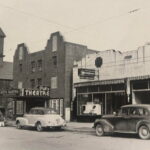
Benjamin T. Pitts built Pitts’ Theatre at the southeast corner of North Main and East Church streets.
The legacy Manassas Journal covered its opening in September 1936 and described the new theater as a “new playhouse equal to any in Washington.” The newspaper expected it to draw people into Manassas who otherwise traveled toward Washington for entertainment.
Pitts’ became part of the familiar rhythm of going into town: movies, dates, children waiting for the doors to open and neighbors seeing neighbors on Main Street.
The theater served both black and white patrons, but seating was segregated. Period advertisements in the legacy Manassas Journal specifically designated the balcony for Black patrons while listing the same posted admission prices as the rest of the theater.
That is part of the record of Pitts’ Theatre as well: generations of Manassas residents shared the experience of going to the movies, but under the segregation practices of the time.
Fire, Rebuilding and a Return to Main Street
An intentionally set fire badly damaged Pitts’ Theatre in March 1950. A Manassas man later confessed to setting the fire and stealing movie film from the theater.
Pitts rebuilt.
When the theater reopened that summer, the legacy Manassas Journal reported that crowds arrived early and children waited outside during the afternoon for the doors to open. The newspaper described reopening night as a “grand affair” for Manassas and the surrounding area.
The theater operation eventually moved from downtown, but part of the old Pitts building remained and became connected with the next chapter of the block.
From the Downtowner to the Olde Towne Inn
The Stonewall Jackson Hotel was demolished in the 1960s and replaced by the Manassas Downtowner motel. The Downtowner became the Olde Towne Inn in 1973. Part of the former Pitts’ Theatre structure was converted into the motel’s coffee shop.
That coffee shop became a gathering place of its own.
And in one corner sat the Roundtable.
The Roundtable
The Olde Towne Inn coffee shop became known for a particular table where local figures regularly gathered to exchange news and conversation.
A 1994 Washington Post account documented the Roundtable as a longtime meeting place for judges, lawyers, politicians and others involved in civic life around Manassas and Prince William County.
Manassas lawyer John Foote recalled that local leaders routinely gathered there. Jimmy Rice, a longtime Manassas businessman and firefighter, described how quickly information traveled around the table:
“You could get all the local news in an hour.”
The gathering was popular enough that regulars came at different times throughout the day. Marie Brent served the group for more than 18 years. When she later opened Marie’s Cafe on Center Street, some of the Roundtable regulars followed her there.
In January 1994, a fire destroyed the coffee shop and ended the Roundtable’s years at the Olde Towne Inn. The motel survived and continued operating.
It was an uncomplicated part of small-town life: a table, a cup of coffee and a place to keep up with Manassas.
“They’re No Roundtable”
The tradition of meeting over coffee did not completely disappear.
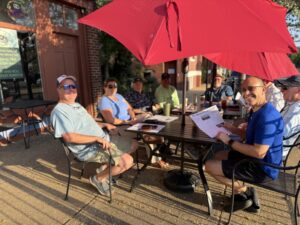
An informal group known locally as the Cattlemen still gathers across the street. Chase Rice remembers the original Roundtable from childhood, when he regularly joined his father at the Saturday morning gatherings.
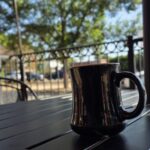
Years later, Chase recovered and preserved original coffee cups from the Roundtable, small pieces of a place and tradition that had become part of Manassas history.
Asked how today’s group compares with the original, Chase offered the Manassas Journal a good-natured assessment:
“They’re no Roundtable.”
The jab comes with a smile, but the comparison says something about how strongly the original Roundtable is still remembered.
It was not an official board, commission or organization. It was simply a table where generations of local leaders and neighbors met, talked and kept up with Manassas.
What’s Next
The City purchased the Olde Towne Inn property in 2023 and later cleared the site for redevelopment.
A boutique hotel remains part of the redevelopment plan.
More detailed hotel plans are expected later this fall and will require review by the Architectural Review Board. A review date has not yet been announced.
The City has not announced a final hotel brand, room count, construction start or opening date.
SOURCES
City of Manassas, Downtown Redevelopment
City of Manassas, Olde Towne Inn Survey Responses
City of Manassas Community Development Department response, Christian Samples, Planning Manager and Zoning Administrator, Aug. 27, 2026
The Washington Post, “The Embers of an Era,” February 1994
Manassas Journal interview with Chase Rice and local history reporting