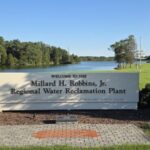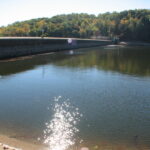
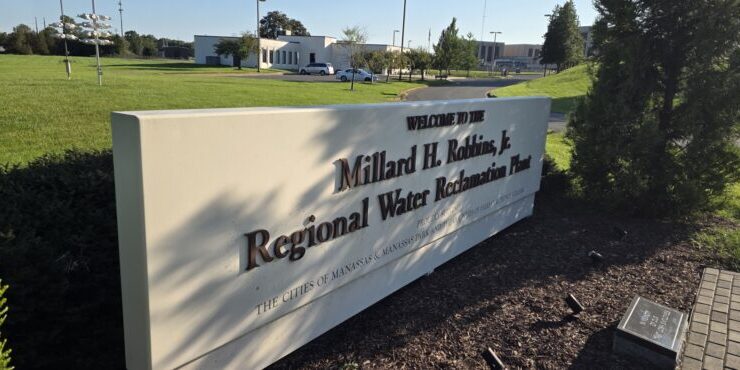
Prince William County supervisors are scheduled to consider a resolution on Sept. 15 opposing proposals to divert treated UOSA water from the Occoquan watershed for uses that would prevent the water from returning to the Occoquan Reservoir system.
The issue involves the Upper Occoquan Service Authority, or UOSA, a regional wastewater-treatment authority serving Prince William County, Fairfax County, the City of Manassas and the City of Manassas Park.
The proposed resolution says certain UOSA and City of Manassas representatives have expressed renewed interest in using wastewater or treated UOSA water for consumptive reuse. In this context, that means using the water in a way that permanently removes it from the Occoquan watershed instead of returning it to the reservoir system.
The resolution does not identify those representatives, describe a specific project or say how much water could be involved.
2-Minute Brief
WHAT IS HAPPENING: Prince William County is considering a resolution opposing the permanent removal of treated UOSA water from the Occoquan watershed.
WHO IS INVOLVED: UOSA serves Prince William County, Fairfax County, the City of Manassas and the City of Manassas Park.
WHY IT MATTERS: Treated UOSA water normally returns through Bull Run toward the Occoquan Reservoir, where it supports the regional water supply. During drought conditions, UOSA return flows can account for as much as 90% of reservoir inflow.
WHAT IS UNKNOWN: The resolution does not identify which UOSA or City of Manassas representatives were involved, what use is being considered, who would receive the water or how much could be involved.
MANASSAS: The City of Manassas operates its own drinking-water system centered on Lake Manassas, while its wastewater treatment is part of the regional UOSA system.
How UOSA Works
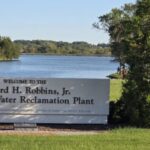
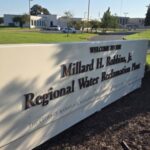
UOSA was created in 1971 by Fairfax County, Prince William County, Manassas and Manassas Park after serious water-quality problems developed in the Occoquan watershed.
Its regional treatment plant began operating in 1978 and replaced 11 smaller wastewater-treatment plants.
Today, wastewater from portions of all four jurisdictions is sent to UOSA for advanced treatment.
After treatment, much of that water is returned through Bull Run toward the Occoquan Reservoir.
That returned water is known as reclaimed water, meaning wastewater that has been treated to a high standard so it can be safely reused.
The Occoquan system uses that reclaimed water as part of the broader regional water supply.
What “Consumptive Reuse” Means
The resolution does not oppose water reuse generally. It focuses on consumptive reuse, in which treated water would be permanently removed from the Occoquan watershed.
By contrast, non-consumptive reuse would allow the water to be used for another purpose and then returned to the Occoquan River, one of its tributaries or the reservoir system.
Prince William’s proposed resolution says it would support an intermediate use only if the water ultimately returns to the watershed and other water-quality protections are met.
Why the Return Flow Matters
The Occoquan Reservoir is one of Fairfax Water’s two major drinking-water sources and supplies water to portions of Fairfax and Prince William counties.
Prince William Water purchases much of the drinking water it distributes from Fairfax Water.
The proposed resolution says UOSA return flows are an important part of that system and can account for up to 90% of reservoir inflow during drought conditions.
The resolution argues that permanently removing some of that water could reduce the amount returning to the reservoir.
The resolution does not quantify a specific impact and does not describe a specific diversion project.
How Manassas Fits In
The City of Manassas is connected to the issue through wastewater, but its drinking-water system is different.
Manassas operates its own water system, with Lake Manassas serving as a primary source of drinking water.
Its wastewater system, however, is part of UOSA.
That means wastewater collected in Manassas can enter a regional treatment system shared with Prince William County, Fairfax County and Manassas Park, even though the City does not rely on the Occoquan Reservoir in the same way for its primary drinking-water supply.
That distinction is important because the current debate concerns what happens to water after it has entered the regional wastewater system and been treated by UOSA.
A Regional System Created in 1971
The regional system grew out of water-quality problems in the Occoquan Reservoir in the late 1960s.
Studies found that inadequately treated wastewater from numerous smaller treatment plants was contributing to pollution in the reservoir.
Virginia adopted the Occoquan Policy in 1971, leading to the regional approach that became UOSA.
What the Resolution Says Now
The proposed Sept. 15 resolution says certain UOSA and City of Manassas representatives have expressed renewed interest in diverting wastewater or treated UOSA water for consumptive reuse.
It does not identify those representatives or say whether the discussions involve a formal proposal.
The resolution also does not identify:
- a customer or user;
- a proposed location;
- an amount of water;
- a timetable; or
- the purpose for which the water would be used.
If approved, Prince William County would formally oppose any diversion that permanently removes UOSA water from the Occoquan watershed and reduces return flows supporting the regional water supply.
What Comes Next
The resolution does not identify the representatives involved or state whether a specific proposal exists.
The Manassas Journal has requested clarification from the City of Manassas and will update this report as additional information becomes available.
Sources / Further Reading
Prince William County proposed resolution on Occoquan Reservoir consumptive reuse
Upper Occoquan Service Authority: About UOSA
Upper Occoquan Service Authority: History of the regional wastewater system